Nail Art

Best Cuticle Nippers for a Professional Manicure 2025
If you want your nails to look like you went to the salon, it takes more than nail polish and a steady hand. A flawless finish also includes tidy cuticles. You can push the skin back, but sometimes the excess needs to be trimmed. That's when the best cuticle nippers for a professional manicure come in handy. But before discussing this essential manicure tool, we should warn you. Frequent trimming may cause the cuticles to grow back thicker and more rigid. If you must cut them, use sharp, sanitized nippers and be careful to avoid injuring the skin. Only remove the dead parts after you've pushed back the cuticles. Alternatively, try liquid cuticle remover first. Now, let’s talk about the different types of cuticle nippers to help you decide which ones are best for your needs. How to Choose the Best Cuticle Nippers Nippers come in different sizes and styles with regard to the blades, the joints, and the handles. Moreover, acrylic nippers look very similar to cuticle nippers but serve a different purpose. Here is a brief explanation to help you pick the best manicure tools for your situation. Cuticle Nipper Sizes As you shop for cuticle nippers, first consider the size. The most common are small, medium, and large, but they go by different names. Small is called "quarter jaw," the medium is "half jaw," and large is “full jaw.” The small or quarter jaw size is about 3mm, the half jaw is 5mm, and the full jaw is 7mm. Which one should you pick? Well, the medium size is the most popular. It’s ideal for trimming cuticles around most adult fingernails and toenails. Nevertheless, the smaller the jaw, the better the control you’ll have using the nippers. Next, check the handle length to ensure the nippers fit in your hand and feel comfortable. Again, the most common size is 4 inches long. Therefore, if you went with the 4-inch-long nippers with a half jaw (5mm), you’d have the most popular size to work with. Here’s an example: Cheri Cuticle Nipper T01-14 BUY NOW These stainless steel cuticle nippers are made to last. Notice the sturdy box joint and the streamlined construction. The rust-resistant metal can be cleaned and sanitized again and again. Soak them in 70% rubbing alcohol for 5 to 10 minutes. Then let them dry completely before storing them in the included protective case for the tip. The sharp blades are designed to snip off excess skin without snagging or tearing. What’s more, the handle was designed for either left or right-handed users. If you look closely at the handle, you'll see the spring stores on one side. Rotate it and click it into place on the other side to get spring action for effortless trimming. Not only does it make the nippers easier to control, but it also makes them more powerful. These are half-jaw or 5mm nippers, the most common blade size used by pros and home manicurists worldwide. Cuticle Nipper Joints and Springs Occasionally, you’ll find cuticle nippers with double springs or a lap joint. If there are 2 springs, the cuticle nipper may be more difficult to squeeze closed. And a lap joint, which is similar to what scissors have, is less durable than a box joint. Furthermore, a box joint is superior for precision trimming because it doesn't allow the blades to shift or slide unexpectedly. T&N Cuticle Nipper D-01 BUY NOW Why would you choose a full jaw nipper instead of something smaller? The average person doing occasional manicures or pedicures at home might not want large nippers like these. But professional manicures might choose them because they can work faster with them. How to Use Cuticle Nippers Correctly If you struggle to manage overgrown cuticles, nippers can save the day. They instantly get rid of the problem once the cuticles are pushed back. Here’s how to get the most out of your new cuticle nippers. Soak the hands in warm water with soap for 5 minutes. Then check to see if the skin is soft enough to be pushed back. Use an orange stick or cuticle pusher to gently nudge the skin off the nail plate. If you’re struggling to push back the cuticles, use cuticle remover to soften them further. If at least 1mm of excess skin surrounds the nail plate, use the nippers to trim it. Also, use the nippers to trim hangnails. Never cut so close that it causes bleeding. When the manicure is finished, apply cuticle oil to keep the skin soft and healthy. If the cuticles or hangnails bleed, wash them with cool water and soap, then apply liquid styptic or direct pressure with clean gauze to staunch the bleeding. Alternatives to Using Cuticle Nippers If you feel hesitant about using nippers because you’ve heard so many dire warnings, don’t worry. You have other options for achieving a professional manicure. It’s accurate that frequent cuticle cutting can make the skin around your nails even tougher. But it’s also true that you can soften the skin and resolve the problem without trimming it. Cuticle remover is an effective option for softening and clearing away dead tissue. This product typically features an alkaline ingredient like caustic potash to rapidly dissolve dead skin. But most formulas also have moisturizers like lanolin and natural oils to protect your fingertips. If you don't have cuticle remover, try baking soda paste. But even soaking your fingers in warm water for a few minutes can make a big difference. Plus, applying cuticle oil day and night will work wonders in a matter of days. Every time you shower, gently push back the cuticles with your fingernails. Then massage cuticle oil into the fingers and toes. You won't have to worry about unruly cuticles within a week or two. Conclusion We hope this article helped you find cuticle nippers for a flawless finish on every manicure. We’re glad you dropped by. Be sure to take advantage of our deals to upgrade your manicure tools as needed. You might also enjoy seeing our new arrivals for the latest trends in the nail world. Happily, we offer free delivery for shipments over $100!
Learn more
How to Apply Red Aspen Press on Nails?
Press-on nails are a cheap and easy way to get a gorgeous manicure without visiting a salon. You can pick up a pack at Target or Walmart while shopping. However, you probably know by now that not all press-on nails offer the same quality or benefits. Maybe you've heard about Red Aspen Nail Dashes and checked reviews to see if they're any good. Now you want to know how to apply Red Aspen nails to see if they are more user-friendly than the competition. Well, you're in the right place! What Are Red Aspen Nails? Red Aspen Nail Dashes are press-on nails that come in various styles and designs. They come in different lengths: Extra, long, medium, short, and petite. and diverse shapes: Almond, square, round, ballerina, coffin, and squoval. as well as various finishes: Glossy, glitter, chrome, printed, and matte. No wonder they are so popular! Moreover, Nail Dashes and the accompanying glue contain no phthalates or parabens; they are vegan and cruelty-free. It's even possible to remove the adhesive with vinegar instead of acetone. What’s in the Package of Red Aspen Nails? Each pack includes 24 nails to ensure you can find the right size for each finger. Also, each package includes glue, a miniature cuticle stick, a silver-colored mat, and a combination nail file/buffing block. There's enough nail adhesive in the 7g tube for more than one application, and the glue is good for 3 months after it's opened. That's ideal, as the Nail Dashes are reusable. They stay on for about two weeks, and then you can wear them again and again! How to Choose the Right Nail Dash Sizes for Your Nails? The official Red Aspen directions say to use short and square nails if you have small nail beds. Otherwise, you can customize the length and fit with the included nail file. You can trim and file these press-on nails to suit your size and preference. When you open the box, sort the Dashes by size and compare them to your natural nails. Each Dash has a number printed on the inside. Press them into place without the adhesive and see how they look. They should span the top without gaps on the sides. You'll likely find a perfect fit for each nail. Furthermore, the press-on nails can be trimmed and filed to reshape them. How to Apply Red Aspen Nail Dashes? After choosing the sizes you need, the next step is to prepare your own nails. Trim them, file them, and lightly buff the surface to remove the natural shine. Push back the cuticles, too. Then clean your nails with rubbing alcohol or a nail wipe with acetone to remove debris and oil. Next, if you’ve never used press-on nails, you may want to practice with the glue. (On the bright side, it’s low odor.) The tube has a brush applicator for convenience. All you need is a small dot of adhesive on your nail and a thin layer on the back of the Nail Dash. Please refer to the official instructions and pictures for clarification. Begin with the pinky finger. The glue goes on the side nearest your finger where the size number is printed. If you only need the Dashes to last for a few days, put a thin line of glue down the middle of your nail from the tip to the cuticle. Or, if you want the nails to last longer, place the glue on both the natural nail and the Dash. After brushing on the glue, let it set for a few seconds. Then line up the Dash with the cuticle and approach at a 45° angle to press the Dash down onto the nail. It should fit snugly. You might feel a little bit of pressure when you let go. Repeat the steps until all the fingers are done. It typically takes 20 to 30 minutes. How to Remove Red Aspen Nails? The glue should keep your new manicure in place for about 2 weeks. It's designed to break down eventually to protect the natural nails. Still, it's strong enough that you can wash your hands and go swimming without worrying that the nails will pop off. To remove Nail Dashes, you don’t need nail polish remover. Instead, apply cuticle oil to soften the glue or soak your hands in soapy, warm water for 10 minutes. Try lifting the edge gently. If the Dash doesn’t move, wait 5 more minutes and try again. Once you dry your hands, if you see glue residue, use the buffing block to remove it. Vinegar also removes Red Aspen nails glue. In fact, it's recommended for removing residue on Dashes with a matte finish, as acetone will damage the finish. Economical, Professional-grade Alternatives to Read Aspen Nails Red Aspen has been criticized because it's a multi-level marketing company. If you're interested in alternatives, we invite you to see our collection of press-on nails. Like Red Aspen, they come in various styles and sizes like almond, coffin, stiletto, and square. Although many beautiful designs are available, they can also be repainted in different styles. Plus, you can trim and shape them to suit. Each kit comes with 24 pieces to make sure you find the right fit for every finger. The package also includes a cuticle stick, nail file, and adhesive. These press-on nails are safe for natural nails. Moreover, they are compatible with acrylic, fiberglass, and gel enhancements. Of course, they are also reusable! Here’s a video that shows how to choose the correct sizes and apply them like a pro. Conclusion We hope these tips about how to apply Red Aspen Nails helped you today. The hardest part about wearing press-on nails is just deciding which style to try first! In the meantime, take advantage of our many deals to stock up on whatever nail supplies you need. And while you're here, enjoy our new arrivals to see what’s trending in the nail world. Remember, we offer complimentary gifts and free shipping on orders over $100!
Learn more
The Best Toenail Clippers for Proper Nail Grooming
Are you looking for the best toenail clippers to care for your nails? That's a great idea because too many people need to pay more attention to their toes. They grab whatever is cheapest when they shop for manicure or pedicure tools. But taking care of your toenails is essential for maintaining proper foot hygiene and overall health. High-quality toenail clippers make the job easy and prevent injuries.
Learn more
How to Apply Press-on Nails with Glue?
Wouldn’t it be nice to have a flawless manicure that’s affordable and something you can do at home? The solution is to use press-on nails. You don’t need any special equipment, just a little time and patience. But it’s not as easy as it looks! You need insider knowledge to get the best results. It’s time to master the art of applying artificial nails. It’s an essential skill for anyone who wants to do a salon-quality manicure at home. In this comprehensive guide, we’ll teach you how to apply press-on nails with glue so that your nails look amazing and stay put for as long as possible. Step By Step Apply Press-on Nails with Glue The First Step: Choosing the Correct Sizes Before diving into the application process, it's crucial to select the correct sizes for your press-on nails. Look closely at the artificial nails. You’ll see that they are numbered. Zero is (weirdly) the largest – it’s made for the thumbs. Meanwhile, 11 is the smallest size designed for the pinky finger. Take your time to try on different sizes and find the ones that fit your natural nails perfectly. Lay them on top and see how they look. Remember, it's always better to go smaller rather than having them overlap the skin, as it'll give a more natural finish and the nails will be less likely to pop off. Press-on Nails 33-0058-27 BUY NOW Here’s the perfect example of a set of press-on nails. They have an almond shape, which is quite trendy right now. Plus, they are pre-shaped so that you don’t have to spend much time filing once you’ve applied them. Although the nails come finished, feel free to paint them differently or add nail art. They’re compatible with acrylics, gels, and fiberglass. Each box contains 24 pieces. Obviously, that’s more than you need to do a manicure. It’s because the set offers different sizes to make sure the nails fit as many different fingertips as possible. Examine the underside of the nail and you’ll see a tiny number printed there. That’s the size. Soft gel nail tips are packaged in a similar fashion with the sizes printed on them, too. Step 2: Prepare the Nails Now that you have your sizes sorted, it's time to prep your nails for the application. Start by trimming your natural nails and gently pushing back the cuticles. This step is important, as it ensures a smooth, even surface for the press-on nails to adhere to. If you do this part right, the manicure will look better and last longer. Next, cleanse your nails using rubbing alcohol to remove any oil or residue that might interfere with the glue's adhesion. Pro Tip Now you're ready to start putting on the nails. Do your dominant hand first, as this will make the application process more manageable. Step 3: Apply the Glue to the Nails When it comes to choosing an adhesive for your press-on nails, glue is definitely the superior option compared to the double-sided sticky tape that comes in the box. It provides a stronger bond for a more durable manicure. To apply the glue, put a tiny dab of it on the natural nail near the cuticle and a little dab on the interior of the press-on nail near the wide base. Be careful not to use too much glue, as this can cause the adhesive to seep out when the nails are pressed together. It will look messy and may cause the nails to lift later. KDS Nail Glue BUY NOW What do the pros use to glue press-on nails? KDS, of course. It adheres to acrylics, fiberglass, and even silk. Since it dries in record time, all you have to do is press the nail tip in place for 5 seconds. What’s more, it can be used to repair natural nails. If that’s the case, use tweezers to hold the split nail together with the glue, then buff the surface smooth once it’s dry. Step 4: How to Place the Press-on Nails Now, align the fake nail with your natural nail, making sure that the edges match up perfectly. If you come at it from a downward angle with the base settling into place at the cuticle line first, it’s easier to get things right. Make sure everything is flush. Then press the nail firmly into place for ten seconds, allowing the glue to bond securely. Nail techs recommend pushing down on the center while pinching at the sides. If you notice any excess glue around the edges, quickly wipe it off with a cotton swab before it dries. Once it’s done, the press-on nails should last for 10 days or so. However, don’t soak your hands in water for at least a day after you apply them! Even though the glue is superficially dry, it’s still settling and curing. Voilá! You've successfully mastered the art of applying press-on nails with glue! Step 5: Shape and Polish Once you've applied all your press-on nails, you can file and polish them for a smooth, flawless finish. Instead of filing them one by one, wait until you’ve finished them all to let the glue settle a bit more. Then when you file, shape the nails from the sides toward the center. Remember, press-on nails are durable so you may need a coarse grit file. Guess what – you can also trim them. Your regular clippers or scissors aren’t up to the task. Trust us, you’ll need a fake tips cutter. When you’re happy with the shape of the nails, feel free to paint them a different color or do nail art. We have an extensive collection of gels and lacquers in every color of the rainbow for your new manicure. How to Remove Press-on Nails That You’ve Glued On If you went ahead and used the tape to adhere the nails, it comes off with oil and warm water. If you’ve used nail glue, there are proprietary glue remover products or you can simply soak in acetone for 10 minutes. By then, the glue should be soft enough for you to take off the nails and wipe off the residue. Remember to wash your hands and apply cuticle oil and moisturizer to counteract the dryness caused by the acetone. Conclusion With your newfound skills, you can now enjoy a stunning manicure done in the comfort of your own home! Go ahead, flaunt your beautiful nails, and let the compliments pour in! And while you’re at it, check out our deals to stock up on all your nail care needs.
Learn more
How to Clean Acrylic Nail Brushes?
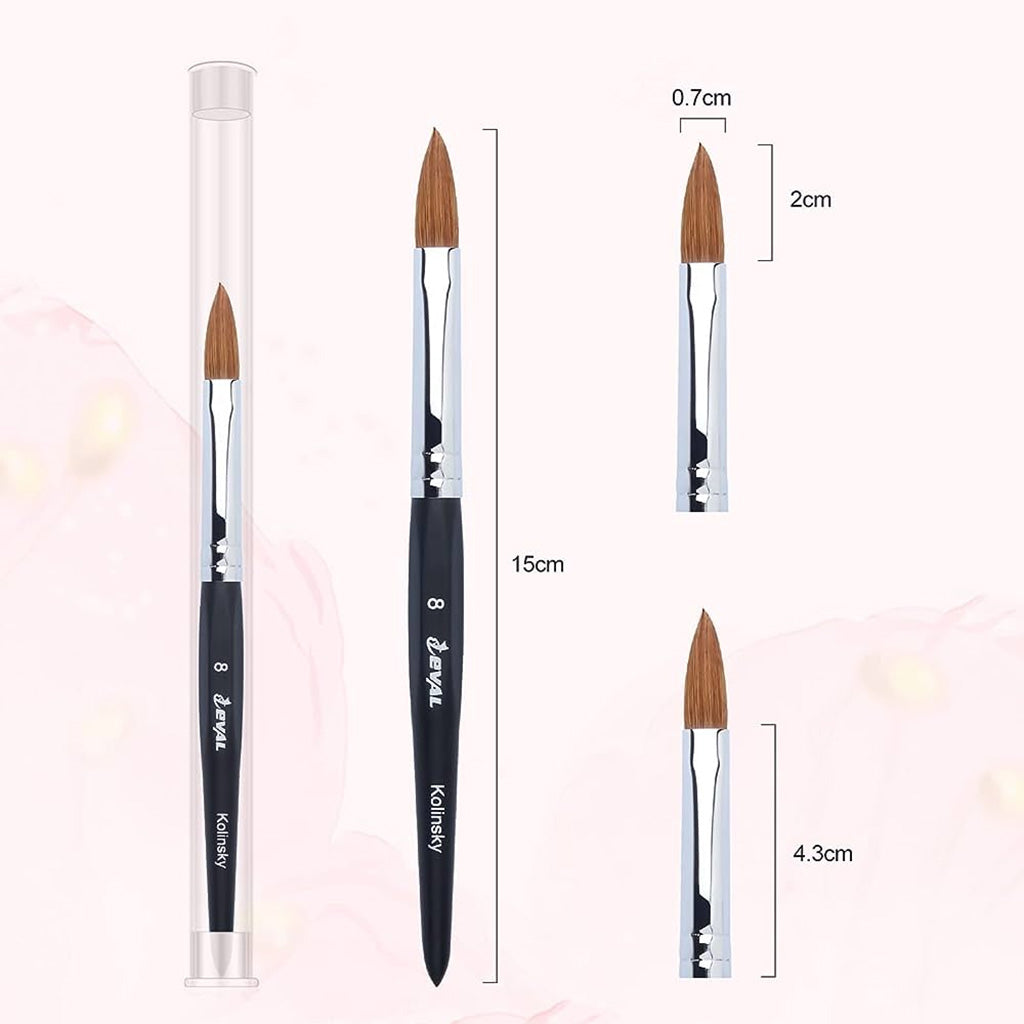
Acrylic nail brushes come in a variety of shapes and sizes, but they all have one thing in common: they need to be cleaned regularly. Otherwise, the natural bristles will become clogged and stiff, making the brush less effective or unusable. So, how often should you clean your acrylic nail brushes? And what steps should you take to keep your brushes looking and working like new? Read on to find out how to clean a nail brush at home. How Often to Clean Acrylic Nail Brushes? If you have a Kolinsky sable brush, the soft natural hair needs to be cleaned while you’re using the brush and again when you’re done. Luckily, liquid monomer is all you need to get the job done. Don’t be shy about frequently wiping off your brushes while you work. Do it each time you go to pick up a fresh bead. It prevents build-up in the bristles. Then dip and wipe them again before letting them air dry and storing them. What Do You Need to Clean Acrylic Nail Brushes? If you have natural hair brushes, they should only be cleaned with liquid monomer. However, synthetic bristle brushes are more tolerant of acetone. In either case, the brushes may have come with care instructions, so please review the directions. If you don’t have a manual for your brushes, here’s a quick overview of what you’ll need to clean them: Liquid monomer. Lint-free cloth or paper towels. Dappen dish or shallow container. Once you’re ready, check out the steps below. How to Clean Acrylic Nail Brushes Keep natural hair brushes in top condition with three easy cleaning steps. Step 1 Pour liquid monomer into the dappen dish or a shot glass. You’ll need enough to dip the bristles. Remember, any excess you don’t use will have to be disposed of properly. (More on that in a moment.) Step 2 Soak the brush bristles in the monomer. Rest the brush at an angle to not deform the hairs. (This is why a shallow dappen dish is better than using a shot glass.) How long to soak the acrylic nail brush? If you just finished doing a manicure, a few minutes should be sufficient. However, if the brush is crusty and needs to be deep-cleaned, leave it soaking for up to 24 hours. Step 3 Wipe off the excess monomer with a paper towel or lint-free cloth. Press gently so as to not pull out bristles or damage them. Reshape the hairs if needed. Then, lay the brush flat and let it air dry completely before storing it. How to Clean Clogged and Crusty Acrylic Nail Brushes Maybe you were in a rush the last time you used them and now your nail brushes are stiff with residue. Let’s talk about how to rescue them. Follow the first two steps above by soaking the brushes in a generous amount of liquid monomer. Leave them for at least an hour before checking them. Feel free to let them soak overnight or for up to 24 hours. Next, pull them out and rinse them in warm water. It’s better to hold them under running water but you can swish them in a cup. Now, soak them again in a clean batch of monomer for a couple of hours. When you pull them out, lay them flat to dry naturally out of direct sunlight. How to Clean Acrylic Nail Brushes Without Monomer? What if you don’t have monomer to clean a nail brush? Can you use brush cleaner? You might be able to use brush cleaner, but check the ingredients. It may contain acetone, and acetone will dry out natural hair nail brushes. However, you can clean a synthetic nail brush with acetone or brush cleaner. Follow the directions on the cleaner. Don’t soak the brush for more than a few minutes in acetone before checking it. Wipe it off on a clean paper towel and dip it in monomer before letting it air dry as usual. How to Clean Acrylic Nail Brushes with Acetone? If you have a Kolinsky sable hair brush, please don’t use acetone unless you’re ready to replace the brush. Acetone will dehydrate the strands and the hairs will no longer be able to hold acrylic beads like they used to. But if you’re absolutely desperate – you’ve tried soaking in monomer without resolving the problem – you could try mixing up 50% monomer and 50% acetone. Nevertheless, only soak the brush for a few minutes. (Open a window or do this outdoors as it will have a strong odor.) When you pull the brush out of the solution and wipe it on a paper towel, the crusty bits should come loose. Then soak the brush again in fresh monomer only for a couple of hours. Let it air dry afterward. Is There a Certain Type of Liquid Monomer That’s Best for Cleaning Acrylic Nail Brushes? There are different types of liquid monomers but they all are mostly made of EMA (ethyl methacrylate). They may also have ingredients that give them a purple tint and UV inhibitors to guard against yellowing. There is a slow setting type that’s easier for beginners to use since it gives the user more time to make adjustments. This is a good option for cleaning brushes when they need to soak overnight. Then, there’s the normal type of monomer that takes about 3 minutes to set. (The competition grade of monomer dries even faster!) Lastly, low-odor and odorless monomers are much more pleasant to use. How to Dispose of Liquid Monomers after Cleaning Acrylic Nail Brushes? Used monomer shouldn’t be poured back into the bottle because it’s typically tainted with powder particles. But you can’t pour it down the drain or flush it, either. The chemicals in it aren’t good for plants or animals! Not to worry, it’s not hard to dispose of monomer in the trash. If there’s only a little bit left in the dish, add an equal amount of powder and let it harden. Then throw it away. You can also absorb the remaining liquid with a paper towel and throw it away. Try not to touch it with your bare hands because monomer can trigger allergies if you’re exposed to it often.
Learn more
Best Professional UV/LED Nail Lamp 2025
Are you searching for the best professional UV LED nail lamp? We want to help you find what you need today. Let's talk about what makes a nail lamp suitable for professional use. Then, we'll discuss the pros and cons of the different types of nail lamps and how to choose between them. Features of a Professional Nail Lamp A salon-quality nail lamp has to be able to cure different types of polish and adhesives. Just as important, it needs to be able to perform consistently over and over throughout the day. The features that professionals look for in nail lamps include: Versatility Power Ease of use Durability Efficiency Versatility has to do with the fact that some polishes and adhesives require UV light only and others can cure with either UV or LED light. If you want to save money, look for a hybrid nail lamp. Power means the ability to cure gels properly so that they don’t look cloudy or bubble and peel. But it’s also nice if the lamp has safety settings like low heat to prevent burns and overexposure. Ease-of-use includes aspects like one-touch timer settings, a motion sensor to activate the light, and an opening large enough to cure an entire hand or foot at a time. Durability has to do with how long before the lamp needs to be replaced and how easy it is to clean and maintain. Efficiency is an indication of not only how much electricity the lamp uses but also how long it takes to use. Now, let’s go over the pros and cons of UV versus LED nail lamps. Benefits and Drawbacks of Different Types of Nail Lamps Which is better: a UV or LED nail lamp? What do salons use? Your local nail salon may have different types of professional gel nail lights. Then they use the best nail lamps for the job. Here’s an example: Lavis UV/LED Nail Lamp BUY NOW When you want a professional finish, this nail lamp performs equally well in the salon or at home. It can cure gels perfectly in seconds. There are 42 LEDs strategically embedded in the interior which has a mirror surface that reflects the UV light for even curing across every finger or toe. The built-in timer has 4 settings for 10, 30, 60, and 90 seconds. Set it and forget it because the motion sensor will activate the light when you need it. Finally, the lamp is portable and rechargeable. The battery has a 15600mAh capacity for hours of run-time before it needs a recharge. It comes with an AC adapter and a user manual. UV Nail Lamps The biggest benefit of a UV nail lamp is that it can cure all nail polishes that require UV light. It’s very effective at curing clear gels, too. But it’s getting harder to find UV nail lamps these days. The drawbacks outweigh the benefits and most manufacturers are switching to polishes that cure with LED UV light. The cons of a UV lamp include the shorter bulb life, greater electrical consumption, and the length of time it takes to cure gels. They also feel hotter on the skin. LED Nail Lamps LED lamps emit ultraviolet light but they do it more efficiently than UV lamps. The UV rays trigger a chemical reaction to turn the liquid polish into a solid plastic. The rays they emit come in specific bandwidths like 365nm + 405nm. That’s why it’s important to check with the brand of polish you be using to make sure it’s compatible with LED light curing. Furthermore, LEDs don’t create as much heat, don’t use as much electricity, and cure polish much faster than a regular UV lamp can. What a UV lamp takes 3 minutes to cure, an LED lamp can do in 30 to 60 seconds. They also have a lifetime that’s up to 50 times longer than a UV bulb. You could run the nail lamp 24 hours a day for 5 years or more before the LEDs burn out. How Long to Cure Gels with a Professional Nail Lamp? When you use a professional LED nail lamp, a color gel polish might take as little as 30 seconds or as long as 90 seconds per layer to cure. If you’re putting on nail tips, the gel adhesive might need 10 seconds to adhere, then up to 60 seconds to cure completely once all the extensions are in place. SNS Cordless UV/LED Nail Lamp BUY NOW Here's a 54W professional nail lamp that's described as hybrid. It has a timer with 3 settings: 30, 45, and a low-heat 60-second option. What’s nice is the removable tray for easy cleaning. There’s also a motion sensor to turn the light on and off when needed. Kiara Sky Beyond pro Rechargeable Led Lamp Volume II This LED nail lamp has a replaceable lithium battery. Still, you probably won’t need to swap it for a few years. The maximum power rating is 48W – more than enough to cure all sorts of gels. It has a LCD with a countdown timer. The settings include 15, 30, 60, and 90 seconds. The latter is of long duration but with low heat. Like all the best nail lamps, it has a motion sensor. It’s also highly reflective inside with no dead zones so that polish cures evenly. You can pull out the stainless steel tray to sanitize it between manicures and pedicures. The casing of the lamp is also acetone-resistant for easy cleaning. Which Type of Nail Lamp Is Safest for Professional Use? Nail lamps in general may raise the risk of skin cancer from UV radiation. Nevertheless, the danger can be mitigated. The person getting their nails done can treat their skin with sunscreen or wear UV-protective gloves to cut down on exposure. Plus, the nail tech can follow the directions regarding how long to cure the polish or adhesive. Conclusion We hope you found what you needed to know about nail lamps because we enjoyed showing off our best models. You can view our other top picks on our nail light page. If you’re doing manicures at home, a professional-quality nail lamp quickly pays for itself. And a high-quality LED nail lamp offers even more savings down the road.
Learn more